
A story about what we choose to hold on to — and what we don’t.
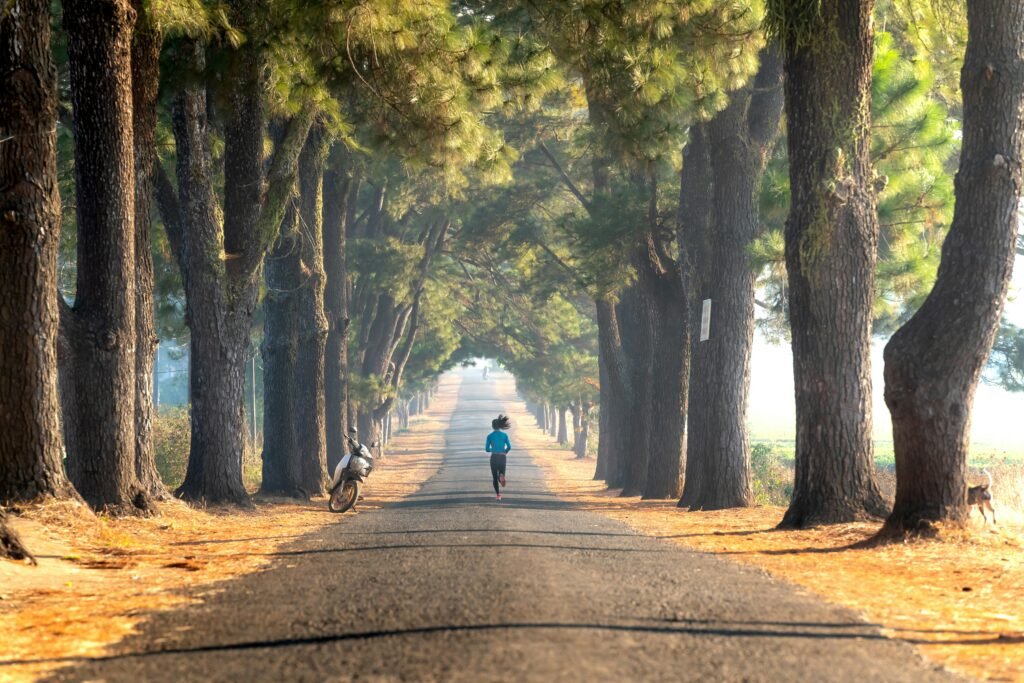
She was already running late.
Her mind was sprinting ahead of her feet — rehearsing what she’d say in the 9am meeting, calculating whether she had time to grab a coffee, replaying the email her manager had sent the night before. The one she still didn’t quite know how to interpret.
The morning air was cool. Her shoes clicked fast against the pavement. She had a plan. She had a rhythm.
Then — BAM.
A stone. Sitting right in the middle of the road like it had always been there, like it had every right to be there. Her big toe took the full force of it. She gasped and stumbled, lifting her foot, eyes scanning down to see what had dared to stop her.
She was bleeding.
She looked at the stone with pure fury — that specific kind of anger that rises when something small derails something important. She stared at it like it had done this on purpose. Like this was personal.
And then, without really thinking about it, she bent down, picked it up, and kept walking.
She arrived at the office, stone in hand, toe throbbing, face tight. She set her bag down at her desk. Her colleague looked up.
“What’s that?” he asked, nodding at the stone.
She looked down at it. Still in her hand. She had carried it all the way from the street, up four flights of stairs, through the office door, past the reception desk, and to her chair.
She hadn’t even noticed.
We All Have Stones
Here’s the thing I keep coming back to: the stone didn’t follow her. She chose to carry it.
Not consciously. Not because she decided, “Yes, I’d like to bring this piece of road rubble to my workplace today.” It happened automatically, driven by anger and momentum and a mind too distracted to notice what her hands were doing.
Sound familiar?
Because most of us are doing the same thing — just with different kinds of stones.
We carry the comment a colleague made in a meeting three weeks ago. We carry the text message that was read and never answered. We carry the performance review that stung more than we admitted. We carry the argument we had with someone we love, even when we’re sitting in a room full of people who have no idea what’s happening inside us.
We pick these things up in moments of pain or anger or surprise — and then we just… keep walking. And they come with us everywhere.
“The stone didn’t follow her. She carried it.”
The Injury Isn’t the Problem
Getting hurt isn’t avoidable. Life will always have stones — unexpected, unwelcome, sometimes genuinely unfair ones. The stubbed toe, the harsh word, the door that closes too soon, the thing that goes wrong on the morning when you most needed it to go right.
That part is not always in your control.
But what happens next? That part is.
The moment between the pain and the response — that tiny, easy-to-miss space — is where everything actually happens. It’s where you either set the stone down or you pick it up. And most of us have never been taught to notice that moment. We’ve never been shown that there even is a choice.
So, we carry. And we carry. And we wonder why we feel so heavy by the time we get home.
Putting It Down
Setting a stone down doesn’t mean pretending you weren’t hurt. It doesn’t mean the pain wasn’t real, or that whatever happened was okay. It simply means you’ve decided that the stone doesn’t get a seat at your table, a place in your meeting, a role in the rest of your day.
It means you can say: “That hurt. And it’s not coming with me.”
That’s not weakness. It’s one of the harder, quieter forms of strength there is.
Personal growth — real growth — isn’t always dramatic. It’s not always the big epiphany or the life-changing moment. Sometimes it looks like this: noticing what’s in your hand, asking yourself if you want to keep carrying it, and gently, deliberately, putting it down.
A Question Worth Sitting With
So, I want to ask you something, and I hope you’ll take a moment to really sit with it:
What stone are you carrying right now that you don’t actually have to?
Not the things you’re holding with intention — responsibilities, commitments, care for the people you love. Those are worth carrying. I mean the other things. The grievances. The replayed conversations. The things that hurt you once, and that you’ve been reliving every day since.
What would today feel like if you put one of them down?
She looked at the stone for a long moment. Then she walked to the window, opened it, and placed the stone on the outer ledge. Not dramatically. Not angrily. Just quietly.
She turned back to her desk, took a breath, and opened her laptop.
The meeting was about to start. And for the first time all morning, her hands were free.
— Written as a reminder that you are always allowed to put it down.
Salima
Just me thinking out loud over here