
How Two Weeks with a Simple Tool Transformed Chaos into Clarity
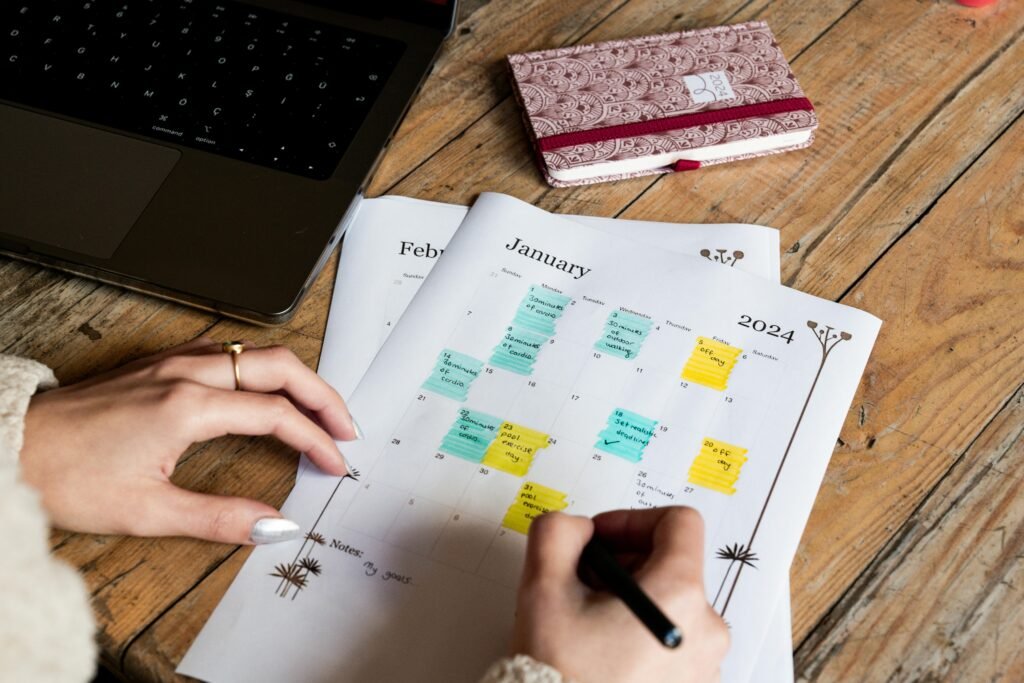
For years, I lived in what I believed was an acceptable state of organized chaos.
I had notebooks—several of them, scattered across rooms. Post-it notes adhered to surfaces in every corner of my home. Digital reminders that I would dismiss and forget. Mental notes that I assured myself I would remember but inevitably did not. I told myself I was managing. I told myself this was simply what busy, ambitious women did.
But underneath the performance of productivity, there was a constant, low-grade anxiety—a background hum of mental load that never quieted. Tasks slipped through the cracks. Follow-ups were forgotten. Commitments were remembered at the last moment, creating unnecessary stress. And in the quiet moments, I felt scattered. Fragmented. As though pieces of my life were distributed across too many places, and I was spending all my energy trying to hold them together in my mind.
Then one afternoon, I had a sudden, almost visceral craving: I wanted a planner. Not just any planner—a beautiful one. Something that felt inspiring to hold, magical to open, intentional to write in. Something that invited me into a different relationship with my time, my commitments, and my life.
The Simple Act That Changed Everything
I went to the store that same day and bought it. A planner that made me smile when I looked at it—thick pages, a cover that felt good in my hands, space for everything I needed. It was not expensive. It was not complicated. It was simply beautiful and functional, and that combination mattered more than I had realized.
That evening, I sat down with it for the first time. I opened to the current week and began writing. Every appointment. Every task. Every follow-up I had been carrying in my head. Every intention I had been meaning to act on but kept postponing.
And something shifted immediately.
What Transformed in Two Weeks?
Within two weeks of using my planner daily, I felt like a different person. Not because anything external had changed dramatically, but because my internal experience of my life had fundamentally shifted.
I felt grounded
There is something profoundly stabilizing about seeing your life laid out in front of you—not spinning in your mind but held safely on a page. Every task, every commitment, every intention written down and contained. The mental load that had been exhausting me for years was suddenly externalized. I no longer had to be my calendar. I could simply consult it.
I felt powerful
For the first time in years, I was not reacting to my days—I was designing them. I knew exactly what needed my attention and when. I could see my priorities clearly. I could make choices about how to spend my time with intentionality rather than urgency. This sense of agency, of authorship over my own life, was quietly transformative.
I felt intentional
The planner became more than a tool for tracking obligations. It became a space where I could design the life I wanted to live—not someday, but this week. I began scheduling not just meetings and errands, but the things that nourish me: reading time, journaling, reflection, growth. Suddenly, these were not aspirations floating in the back of my mind. They were appointments with myself, as important as anything else on my calendar.
What My Planner Now Holds
My planner is no longer just a list of tasks. It has become a container for my entire life—the practical and the sacred, the obligatory and the intentional:
The essentials:
• Daily tasks and commitments—all written down, nothing forgotten, no mental juggling
• Weekly and monthly priorities—everything visible, everything aligned with what actually matters
• Follow-ups and deadlines—I know exactly what needs attention and by when, eliminating the anxiety of forgotten commitments
The sacred spaces:
• Reading time—one chapter from a book that feeds my mind
• Learning time—a podcast episode or course lesson that expands my thinking
• Journaling—processing thoughts, emotions, and insights that would otherwise stay tangled in my mind
• Word of the year reflection—checking in with my guiding intention and ensuring my actions align
• Weekly money date—reviewing my spending with curiosity and celebration, practicing financial sovereignty
• Spiritual connection—intentional time to talk to God, pray, or simply be in stillness
The simple act of writing these down—of giving them space on the page—transformed them from vague intentions into lived reality. What we schedule, we honor. What we write down, we make real.
Why Planners Work for High-Achieving Women?
High-achieving women often resist planners. We tell ourselves we do not need them. We pride ourselves on our ability to keep everything in our heads, to mentally juggle countless responsibilities, to remain flexible and responsive.
But this is not a strength. It is a survival strategy born from necessity—and it comes at an enormous cost.
The mental load of holding everything in your mind drains cognitive energy that could be directed toward creativity, strategy, rest, or joy. It creates background anxiety that never fully resolves. It leaves you feeling perpetually behind, perpetually overwhelmed, perpetually one forgotten task away from failure.
A planner is not a productivity hack. It is a tool for sovereignty—for reclaiming your mental space, your time, and your sense of agency over your own life.
Here is what a planner actually gives you:
Focus
When everything is written down, you can see clearly what matters most. You stop confusing urgency with importance. You stop letting other people’s priorities dictate your day. You begin making intentional choices about where to direct your attention—and that clarity is worth more than any productivity technique.
Calm
Your mind stops juggling. The anxiety of “Am I forgetting something?” dissolves. You can be fully present in what you are doing because you trust that everything else is safely recorded and will receive attention at the appropriate time. This psychological relief is profound.
Growth
You intentionally carve out time for learning, reflection, and personal development. These practices stop being things you will do “when you have time” and become non-negotiable appointments with yourself. Growth becomes scheduled, not aspirational.
Alignment
Your daily actions begin to reflect your values and priorities. You stop living reactively—responding to whatever is loudest or most urgent—and start living intentionally. The gap between who you want to be and how you spend your time begins to close.
A Framework for Beginning Your Planner Practice
If you are ready to experience this shift—if the idea of moving from scattered to grounded, from reactive to intentional, speaks to something in you—here is a simple framework to begin.
You do not need a complicated system. You do not need color-coding or elaborate templates. You simply need to show up to your planner consistently and use it as a tool for clarity and intention.
1. The Daily Check-In (5 minutes each morning)
Every morning, before you check your phone or dive into work, open your planner. Write down:
• All appointments and commitments for the day
• Tasks that must be completed today
• Follow-ups you need to make
• One personal priority (reading, journaling, movement, rest)
Then review what you have written and identify the three most important items. These become non-negotiable. Everything else is secondary.
2. The Weekly Overview (20 minutes each Sunday)
Set aside time each Sunday to plan the week ahead. This is not just scheduling—it is designing. Look at the blank week and ask yourself: What do I want to create this week?
Write down:
• Weekly goals and key commitments
• Personal growth time: reading, podcast listening, course lessons
• Your weekly money date to practice financial sovereignty
• Time for reflection, journaling, or spiritual connection
• Any social commitments or rest time you need to honor
Treat these personal priorities with the same respect you give professional obligations. They are not optional. They are how you sustain yourself.
3. The Monthly Planning Session (30 minutes at month’s start)
Once a month, step back and look at the bigger picture. Map out:
• Important dates, deadlines, and obligations
• Personal milestones or celebrations
• Growth activities: courses you are taking, books you want to finish, experiences you want to have
• Weeks where you need extra rest or weeks that will be particularly demanding
This bird’s-eye view allows you to pace yourself wisely, to distribute your energy strategically, and to ensure you are not just surviving but thriving.
4. The Reflection Ritual (5 minutes at day’s/week’s end)
Reflection turns experience into wisdom. At the end of each day or week, return to your planner and write:
• Wins and achievements: What did I accomplish? What went well?
• Lessons learned: What did not go as planned? What would I do differently?
• Gratitude: What brought me joy? What am I grateful for?
This practice closes the loop. It transforms your planner from a task manager into a record of your growth, your progress, and your evolving self.
5. The Celebration Micro-Ritual
This is perhaps the most important practice—and the one most often skipped. Each week, choose one intentional choice you made that brought you joy, ease, or alignment. It might be:
The massage you booked without guilt
The beautiful journal you allowed yourself to buy
The afternoon you spent reading instead of working
The dinner you cooked slowly and savored fully
Pause. Close your eyes. Visualize the joy it gave you. Feel it fully. Then write in your planner:
Yes. I allowed this. I deserved this. I created this.
Mark it with a star, a dot, a crown—whatever symbol feels celebratory. This ritual trains your nervous system to expect joy, to allow pleasure, to trust that you are worthy of ease without needing to earn it through suffering first.
The Deeper Truth About Planners
A planner is not just a schedule. It is not just a list of tasks. It is a physical manifestation of your relationship with time, intention, and self-worth.
When you use a planner intentionally, you are saying:
• My time matters
• My priorities deserve space
• My growth is as important as my obligations
• I have agency over how I spend my days
• I am worthy of living intentionally rather than reactively
This is sovereignty. This is what it means to reclaim your life from the chaos of constant reaction and the exhaustion of mental juggling. This is what it means to live deliberately.
What Happens When You Commit
In just two weeks of consistent planner use, I went from scattered to grounded, from overwhelmed to intentional, from reactive to empowered. But the transformation did not stop there.
Months into this practice, I have noticed deeper shifts:
• I trust myself more. I follow through on commitments to myself as reliably as I follow through for others.
• I experience far less anxiety. The background hum of “Am I forgetting something?” has dissolved.
• I make better decisions. With clarity about my priorities and bandwidth, I say yes to what serves me and no to what does not.
• I honor my growth. Reading, learning, and reflection are no longer aspirational—they happen consistently because they are scheduled.
• I feel more aligned. My daily actions increasingly reflect my values and the life I want to create.
This is not about perfection. There are still days when I fall behind, when I do not check my planner, when life feels chaotic despite my best intentions. But those days are the exception now, not the rule. And when chaos arises, I have a tool to return to—a way to reground, to recalibrate, to find my centre again.
This Practice Is For You If…
You are a woman who:
• Feels constantly scattered, juggling too many mental notes
• Wants to feel more in control of her time and energy
• Longs to live more intentionally rather than reactively
• Knows she needs to prioritize growth, reflection, and self-care but struggles to make time for them
• Wants to close the gap between who she is and who she is becoming
• Craves a sense of sovereignty over her life
If any of this resonates, a planner is not just a tool—it is an invitation into a different way of being.
Your Invitation
Buy a planner that sparks joy. Not the most expensive one. Not the most elaborate system. Simply one that makes you smile when you look at it—one that invites you to open it, to write in it, to make it your own.
Begin writing. Daily tasks. Weekly intentions. Monthly priorities. Sacred time for growth, reflection, and celebration.
Treat it not as a productivity tool, but as a sacred container for your life. A place where you get to design your days rather than simply survive them. A space where you practice sovereignty, intentionality, and self-worth.
Once you do—once you commit to showing up to your planner each day with presence and intention—you will wonder how you ever lived without it.
Your life will transform, moment by moment, page by page. From chaos to clarity. From reaction to intention. From scattered to sovereign.
Salima
Just me thinking out loud over here