
The FOMO Economy: The Seed and the Tree
The scroll
It started the way it always does. One video, then another, then another.
A man in a rented villa telling me digital courses are dead. A woman with a ring light telling me nobody buys PDFs anymore. Someone else promising that AI can build me an app overnight, and that if I don’t get on this wave right now, I will be left behind.
And I’m not going to pretend I just rolled my eyes and kept scrolling. I didn’t. Something in me went quiet. Then the questions started.
Am I doing this wrong? Is my work outdated? Does my woman even exist anymore?
That’s when I knew I had to write this issue. Not because I’m above the FOMO economy, but because I just paid one of its receipts myself.
What the FOMO economy actually sells?
Here is the thing I had to remind myself. The FOMO economy doesn’t sell courses, apps or systems. It sells the feeling of being late. The product is just the receipt you get for buying relief from that feeling.
And once you see the pattern, you can’t unsee it. Forex. Dropshipping. Crypto. NFTs. Now AI apps. Every wave comes with the same script:
- The urgency: “This window is closing.”
- The proof: a lifestyle, not a business. The car, the villa, the laptop on the beach.
- The secret: a “system” you can only learn inside the program.
- The rules: “Courses are dead. PDFs don’t sell. Attention spans are gone.”
- The timer: only five spots left, price goes up at midnight.
Notice what’s never on the receipt: who their audience is, what they actually sell besides teaching others to sell, and how long it really took them.
You’re not late. You’re being sold late.
Why it hooks us so deeply?
FOMO marketing doesn’t create new fears. It presses on old ones.
So, many of us were raised to believe that opportunity is scarce, so grab it before someone else does. We were taught to measure ourselves against everyone else’s timeline. And we learned, very early, to trust outside voices over our own knowing.
So, when a stranger with a big following says you’re doing it wrong, part of us believes him before we’ve even checked with ourselves.
That’s the real power of the FOMO economy. It doesn’t just sell you something. It teaches you to doubt what you already know.
The real receipt
The FOMO economy didn’t take my money this time. It almost took something more expensive: my certainty.
For a few days I questioned my work. I questioned my audience. I wondered if I should stop making journals and start making something faster, shorter, louder. Something more like what they make.
That’s the cost most of us never write down. Not the $497 course, but:
- The focus you scatter chasing someone else’s wave
- The projects you abandon halfway because a new “rule” came out
- The quiet voice that says maybe what I do doesn’t matter
- The time stolen from building the thing that is actually yours
An unexamined scroll costs too much.
The seed and the tree
Then I came back to what I know.
Everything I have managed to build came from working on me. From the inner work. From sitting with a page and telling myself the truth. I didn’t get here through a hack, and I don’t believe you will either.
I’ve seen it in the women I’ve coached, too. We worked through journaling, and I watched what that practice can do. It helped them heal, overcome, achieve, and finally realize things about themselves they had been carrying for years.
Those voices on my screen were right about one thing: their audience may have no patience for a PDF. But they weren’t describing my woman.
My woman wants to slow down. She wants a beautiful page and a question that makes her pause. She isn’t looking for a 30-second shortcut. She’s looking for herself. Short attention spans are their market’s problem, not mine.
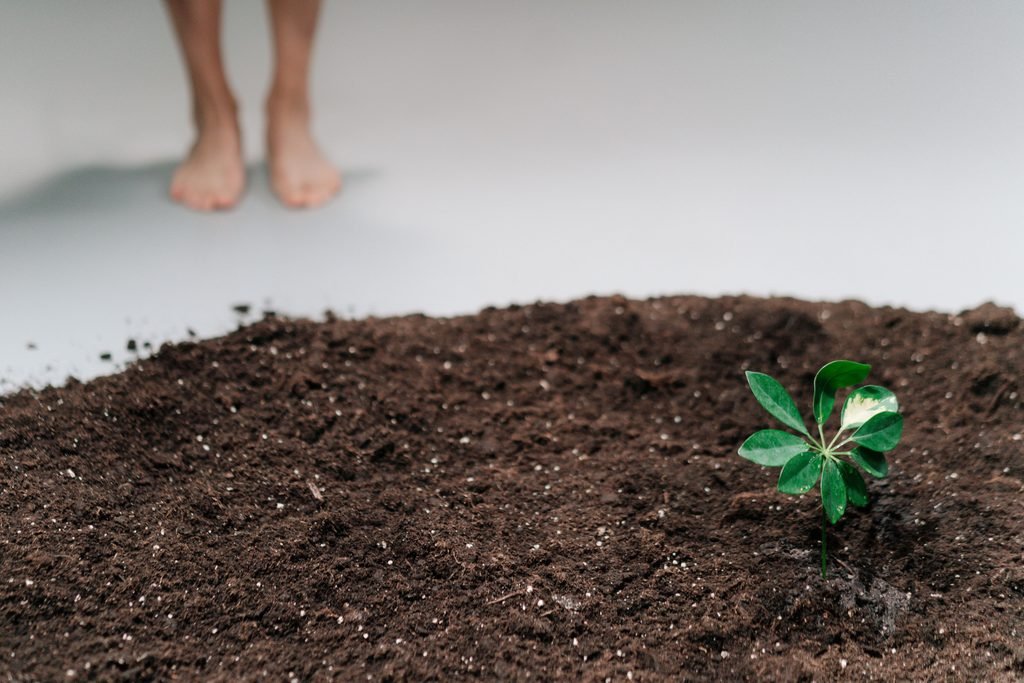
And this is what the FOMO economy will never tell you: there is no such thing as a seed planted today and a tree coming out of it tomorrow.
The real wave is the one you build under your own feet, one page, one season, one honest choice at a time. A sovereign woman doesn’t chase every wave. She chooses hers.
So, before you buy the next “you’re about to miss out” promise, ask yourself three things:
- Does this fit my vision, or just my fear?
- Do I already have what this needs (an audience, a skill, a reason)?
- Would I still want this if there were no deadline?
This week’s journal prompts
Take these to the page slowly. There’s no deadline here.
- What “wave” have I chased, or almost chased, that was never mine to ride?
- When I feel behind, whose timeline am I measuring myself against?
- Which voice did I trust over my own this year, and what did it cost me?
- What do I already know about my work, my people, or my path that I keep second-guessing?
- What seed am I planting right now, and what does it need from me to keep growing?
Until the next issue, keep your receipts. And keep planting.
Salima
Just me thinking out loud over here